Common Questions About Hair Loss During Cancer Treatment
Hair loss is often associated with cancer treatment, but not everyone will experience it.
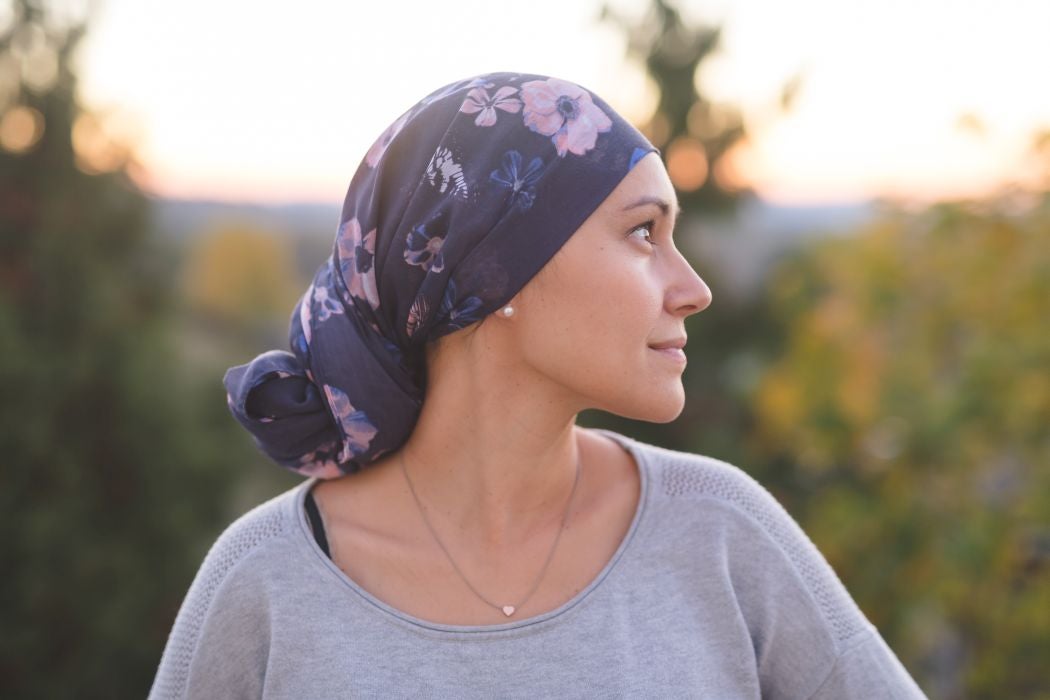
Hair loss (also called alopecia) is a possible side effect of some cancer treatments. Below are answers to common questions to help you and your loved ones understand what to expect and how to manage any changes that may occur.
Does everyone lose their hair during cancer treatment?
No, not everyone does.
Hair loss caused by treatment is known as induced alopecia. It can be partial or complete and typically begins within a few weeks after treatment starts. Hair loss may affect not only the scalp but also other areas such as the eyebrows, eyelashes, arms, legs, and pubic region.1,2
The likelihood of hair loss depends on several factors, including the type and dose of treatment.1,3
Hair loss can be emotionally challenging. It may affect how you see yourself and how others respond to you. It's normal to feel a range of emotions, including sadness, anxiety, or frustration. Talking to someone you trust or accessing support services can help you cope during this time.1,2,4
Is there any way to prevent hair loss during cancer treatment?
There are therapies that may help slow down the process. The most common is scalp cooling, which involves wearing a cooling cap during treatment to lower the temperature of the scalp. This may reduce blood flow to the area and limit how much medication reaches the hair follicles, potentially reducing hair loss.1,5
Scalp cooling has been shown to reduce the risk of significant hair loss by around 40% in some studies.3 However, it doesn't work for everyone, may not be suitable for all treatments, and can cause discomfort or extend treatment time.1,5
If you're interested in scalp cooling or other supportive options, talk to your doctor about what's available and safe for you.
Can I keep my usual hair care routine?
During treatment, your scalp may become more sensitive, so it's best to avoid anything that could cause irritation or damage. Experts recommend adjusting your usual hair care routine to be as gentle as possible.1,2
Try to avoid:
- Using a hair dryer on high heat
- Bleaching or dyeing your hair
- Using flat irons or curling wands
- Hair treatments involving strong chemicals
Instead, opt for mild shampoos, pat your hair dry gently, and use a soft brush. If your scalp becomes dry or itchy, a fragrance-free moisturiser or natural oil may help soothe the skin.1,6
What happens to my hair after cancer treatment?
Hair loss from cancer treatment is usually temporary. Your hair may start to grow back within three to six months after treatment ends.1,3
When your hair grows back, it may look or feel different at first — it might be softer, curlier, or a different colour. These changes are often temporary, and your hair usually returns to its natural texture and appearance over time.1,3,6
If you have concerns about regrowth or scalp health, speak with your doctor or nurse. They can offer guidance and support as your hair returns.
References:
1. Cancer Institute NSW (eviQ). Hair loss during cancer treatment – Information for patients. Version 2.0. Sydney: eviQ; 2022 Feb 22. Available from: https://www.eviq.org.au/p/3423
2. Cancer Council Australia. Hair loss [Internet]. Cancer Council; 2025 [cited 2025 Dec 9]. Available from: https://www.cancer.org.au/cancer-information/cancer-side-effects/hair-loss
3. Shen XF, Ru LX, Yao XB. Efficacy of scalp cooling for prevention of chemotherapy-induced alopecia: a systematic review and meta-analysis. Eur Rev Med Pharmacol Sci. 2021;25(11):5090–103.
4. Cancer Australia. Hair loss [Internet]. Cancer Australia; 2024 Nov 11 [cited 2025 Dec 9]. Available from: https://www.canceraustralia.gov.au/impacted-by-cancer/emotions/hair-loss
5. Breast Cancer Network Australia (BCNA). Scalp cooling to prevent or reduce hair loss [Internet]. BCNA; 2025 [cited 2025 Dec 9]. Available from: https://www.bcna.org.au/resources/side-effects/a-to-z-of-side-effects/hair-loss/scalp-cooling
6. Cancer Council Victoria. Hair loss after cancer treatment – How to manage hair loss [Internet]. Cancer Council Victoria; 2025 Jun [cited 2025 Dec 9]. Available from: https://www.cancervic.org.au/about-cancer/treatments/common-side-effects/hair-loss
Know more about the subject

Nutrition Support During Your Cancer Care Journey
Learn how good nutrition can help support you during cancer treatment.

Staying hydrated during treatment
Safe food handling with a weakened immune system
What Everyday Changes Are Necessary During Cancer Treatment?
Cancer treatment can bring changes to your daily life, but with a few simple adjustments, you can continue many of your usual activities and maintain a good quality of life.
How to Prepare for Cancer Treatment Sessions
A few simple tips to eat well, stay comfortable, and manage your daily routine while undergoing cancer treatment.
Rehabilitation Improves Cancer Patients’ Quality of Life
Several factors, such as age and disease progression, need to be taken into account in order to decide what kind of rehabilitation is best.1