How Social Support Networks Can Help People with Cancer
You don’t have to go through cancer alone. Having people around you—family, friends, support groups, and health professionals—can make a big difference. A strong support network can ease feelings of isolation and help improve your quality of life.1

Being diagnosed with cancer can be overwhelming. You might be dealing with physical symptoms, emotional ups and downs, and changes to your daily life. It's completely normal to need help during this time. People who have strong support from others often feel more positive and better able to cope with the challenges of cancer.2
What is a social support network?
Your support network includes the people and services around you—your family, friends, neighbours, doctors, nurses, counsellors, religious or community groups. Support comes from the relationships you build with these people and the help they provide.1
Here are some of the ways people in your support network might help:1
- Spending time together – going to appointments with you, doing something fun or relaxing, or just being there.
- Listening and talking – having someone to talk to, share your thoughts, or ask for advice.
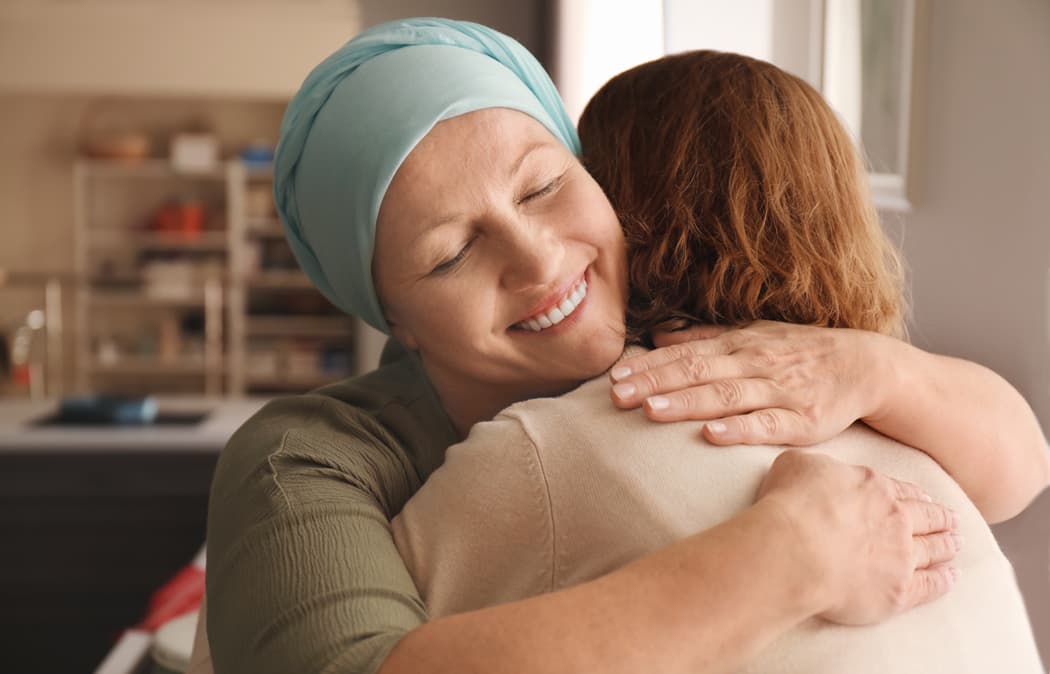
- Emotional support – offering kindness, understanding, encouragement, or just a hug when you need it.
- Practical help – helping with things like cooking, cleaning, transport, or finances.
Are cancer support groups part of a social support network?
Absolutely. Support groups can be a powerful way to connect with others who truly understand what you're going through. Whether you meet in person, over the phone, or online, these groups offer a safe space to share your experiences, ask questions, and feel supported.3
Many people say that joining a support group helped them feel less alone and more hopeful. It's comforting to know that others have faced similar challenges and are willing to listen and help.
The value of support groups
Joining a support group—whether online or in person—can help ease the very common feeling of isolation that often comes with a cancer diagnosis. Everyone's experience with cancer is different, but support groups can remind you that you're not alone.3
How to choose a support group
There are many types of support groups, and it's perfectly okay to try a few before finding the one that feels right for you. Some groups are led by people who've had cancer themselves, while others are run by trained professionals. Some focus on sharing information, others on emotional support, or both.4
If you prefer privacy, online groups can be a good option. You can join in without sharing your name or personal details.
Here are some types of support groups:4
- Self-help or peer-led groups – run by people who've had similar experiences.
- Professionally led groups – guided by counsellors or health professionals.
- Educational groups – focused on learning more about cancer and treatment.
A point to note
Everyone's cancer journey is different. What works for one person might not be right for another. If you hear advice or suggestions in a group that seem helpful, it's always best to check with your doctor or care team before making any changes to your treatment.3
References:
1. CareSearch. Social Support – Clinical Evidence Summary [Internet]. Adelaide: Flinders University; updated 2024 Dec 6 [cited 2026 Jan 5]. Available from: https://www.caresearch.com.au/Evidence/Clinical-Evidence-Summaries/Social-Support
2. Rahman MM, David M, Steinberg J, Cust AE, Yu XQ, Rutherford C, et al. Association of optimism and social support with health-related quality of life among Australian women cancer survivors – a cohort study. Asia Pac J Clin Oncol. 2024. doi: 10.1111/ajco.14079
3. Cancer Australia. Cancer support groups [Internet]. Canberra: Cancer Australia; 2024 [cited 2026 Jan 5]. Available from: https://www.canceraustralia.gov.au/impacted-by-cancer/emotions/cancer-support-groups
4. Cancer Council SA. Peer support groups [Internet]. Adelaide: Cancer Council South Australia; n.d. [cited 2026 Jan 5]. Available from: https://www.cancersa.org.au/get-support/support-services/peer-support-groups
Know more about the subject
Cancer Survivorship: Stages, Statistics, And Care

Navigating Nutrition: Colon Cancer Diet Advice
Eating well and following a balanced, nutritious diet is one of the best ways you can prepare for colon cancer treatment1. But what is a healthy ‘colon cancer diet’?

The Cancer Diagnosis’ Psychological Impact
Anxiety, irritability, apathy, sadness, and depression are common feelings amongst cancer patients.1

Going Back to Work and the Social Scene after Cancer Treatment
"Support from family and friends makes things easier, but you need to be mentally prepared and focus on what you need to do."

Test Article

Complementary Therapies to Reduce Cancer’s Side Effects
They have scientifically-proven benefits and can be used to improve patients’ well-being.1