Head & Neck Cancer: Managing Eating and Swallowing Problems
Practical support for managing swallowing difficulties, weight loss, taste changes and staying nourished.

Practical support for managing swallowing difficulties, weight loss, taste changes and staying nourished.
When treatment affects your mouth, throat or jaw, eating and drinking may stop being simple. Here you'll find practical ways to keep your nutrition and hydration up to help support your mealtimes.
Why Nutrition Is Harder with Head and Neck Cancer
Your lips, teeth, tongue and the muscles of your mouth, jaw and throat all work together so you can chew and swallow. Head and neck cancer and the treatments involved may affect any part of that system. That's why eating and drinking can feel like hard work, and why staying nourished takes a plan.1
Your diet may need to adapt as your nutritional needs change. During treatment you will need to consume more protein and energy than usual to help prevent unplanned weight and muscle loss and to support recovery.
If you or a loved one is managing swallowing issues, the most important first step is an individualised swallowing assessment.
These people can help:
- Speech pathologist — assesses your swallowing and advises on safe food textures, drink thicknesses, swallowing exercises and posture techniques.
- Dietitian — if you're not already seeing one, ask your doctor, nurse or care team for a referral to a dietitian who specialises in head and neck cancer. They can give practical suggestions to keep you well-nourished during and after treatment.
- Oncology nurse or Doctor — for pain relief, mouth care and referrals.
Difficulty Swallowing (Dysphagia)
Trouble swallowing (also called dysphagia) before, during or after treatment is common. It may be caused by the tumour itself, by surgery, or by radiation therapy and chemotherapy, and it may be short or long term.
Signs to watch for:
- Taking longer to chew and swallow, or taking longer than usual to finish a meal
- Coughing or choking while eating or drinking
- Food sticking in your mouth or throat
- Pain when swallowing
Take a simple assessment to see if you might be at risk of dysphagia
The Eating Assessment Tool 10 (EAT-10)2 is a simple 10-question checklist about swallowing. It takes about 2 minutes to complete and can help identify whether your symptoms may need further support.
It is not a diagnosis, but it can be a useful first step in understanding what you are experiencing and starting a conversation with your healthcare team. A qualified Speech Pathologist can provide a dysphagia assessment.
Access the screening tool here: EAT-10: A Swallowing Screening Tool | Nestlé Health Science
How Treatment Can Affect Eating and Drinking
Head and neck cancer treatment can make swallowing harder, which can then affect how well you eat and drink. Surgery, radiation therapy or chemotherapy may change how your mouth, jaw or throat works, causing pain, dry mouth, coughing with drinks or food going down the wrong way (aspiration).3
You can also experience painful sores in the mouth and throat. Treatment can change how food tastes, smells or feels in your mouth making favourite foods harder to enjoy.3
Many people are surprised that water can be harder to manage than food. Thin drinks can move quickly in the mouth and throat. When someone has weaker swallowing muscles, the liquid can slip down before the airway has fully closed. This is what triggers coughing or a choking feeling — and for some people, it becomes so uncomfortable that they may start drinking less, which can lead to dehydration.
Unplanned Weight Loss and Malnutrition
When eating is difficult, weight loss can follow. If the weight loss is unplanned, you may not be getting the right amount of food, energy or nutrients your body needs, which can lead to malnutrition.
Malnutrition affects up to 80% of people during cancer treatment and can reduce strength, energy and quality of life.4 It may also worsen side effects, slow recovery and lead to longer hospital stays.
Having head and neck cancer, and going through its treatment, increases the risk of muscle loss. Maintaining muscle is critical to getting through treatment and keeping up your physical strength.
Getting the Protein and Energy Your Body Needs
During treatment your body needs more energy to avoid weight loss, and extra protein to maintain strength. Protein is especially important because your body doesn't store it. Therefore, having good sources of protein at each meal is important to ensure you're fuelling the body with the right building blocks it needs to help preserve muscle mass and strength.1
Explore Nutrition Support Tips: Nutrition Support During Your Cancer Care Journey | My Cancer My Nutrition
If eating, drinking is becoming difficult, and you are experiencing unplanned weight loss speak to your healthcare team. Early support can improve treatment tolerance, reduce complications and support recovery.
Solutions for Managing the Challenges
You don't have to work this out alone — and small changes make a real difference.
Start with Your Care Team's Advice
A swallow assessment helps your care team understand what food textures and drink thickness is safest for you. Based on your plan, they may recommend nutrition products like the ones below to help you eat, drink and support your overall nutrition.
Making Drinks Safer to Swallow
If thin drinks (like water) make you cough or choke, your speech pathologist may recommend thickening them.
Thickened fluids are modified drinks designed to support safer swallowing by slowing liquid flow. They help improve control during swallowing, reducing the risk of coughing, choking, and aspiration.
ThickenUp® Clear can be used in both drinks and food to change their consistency, help manage swallowing difficulties so you can keep hydrated and get the nutrition you need.
Learn more: Products | My Cancer My Nutrition
Your speech pathologist or dietitian will advise the right level of thickness for you.
Always follow the guidance of a trained healthcare professional as thickness levels should be tailored to your individual needs.
When Food Alone Isn't Enough: Oral Nutritional Supplements
If you're struggling to eat enough each day or losing weight without trying, specialised oral nutritional supplements can help you get extra protein and energy, maintain weight and muscle, and support your strength during cancer treatment.
Your healthcare professional may recommend a specific supplement based on your needs.
If you're on thickened fluids, most supplement drinks can be thickened with ThickenUp® Clear to the appropriate consistency that has been recommended to you. Thickening fluids should be in consultation with a healthcare professional.
Small Volume and High Protein Oral Nutritional Supplements
For head and neck cancer, volume matters — a small volume drink or pudding format that is high in protein can be far easier to finish when you need extra nutritional support.
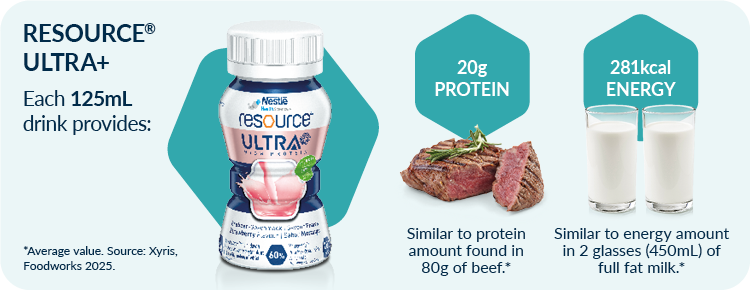
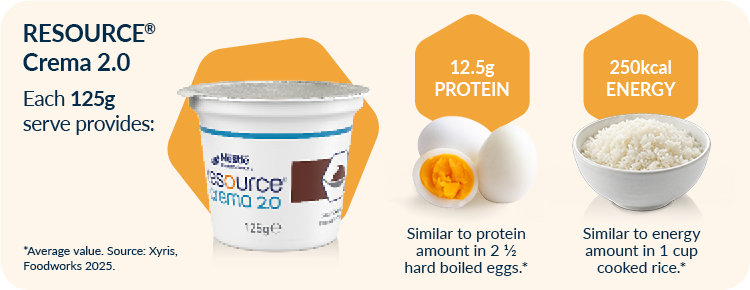
Always check with your healthcare professional team — dietitian, nurse, oncologist or GP — before starting any nutritional supplement, so you choose what's best for you.
For more information, visit the Head and Neck Cancer Australia website.
References:
1. Kiss N, et al. J Parenter Enteral Nutr. 2026; 50: 274-338.
2. Belafsky PC, et al. Annals of Otology Rhinology & Laryngology. 2008;117(12):919-924.
3. Hiatt, J. S., et al. Supportive Care in Cancer. 2022; 30(1), 813-824.
4. Arends J, et al. Clin Nutr 2017;36:1187-96.
RESOURCE® ULTRA+, RESOURCE® Crema 2.0 are foods for special medical purposes specifically formulated for medical conditions where nutritional needs cannot be met through diet modification alone. Must be used under medical supervision. THICKENUP® Clear is a food for special medical purposes for the dietary management of people with swallowing difficulties. Must be used under medical supervision.
Know more about the subject

Take the EAT-10 Test: A Swallowing Screening Tool
During head and neck cancer treatment swallowing changes are common. This short check can help identify if you may need further support.

How Cancer Patients Can Benefit from Exercising
Staying active during and after cancer treatment can help you feel stronger, reduce fatigue, and support your recovery. Even small amounts of movement can make a difference — just check with your health care team before getting started.1

How Social Support Networks Can Help People with Cancer
You don’t have to go through cancer alone. Having people around you—family, friends, support groups, and health professionals—can make a big difference. A strong support network can ease feelings of isolation and help improve your quality of life.1

Crucial Points in the Doctor-Cancer Patient Relationship
One of the principles of the doctor-patient relationship is the patient’s right to know and decide on everything that involves their health.
Cancer: What Is It, Risk Factors and Stages
It’s only natural to feel scared and anxious after receiving such news, but treatments have come a long way, and the chances of recovery greatly increase with an early diagnosis.1

Can Cancer Treatment Affect Fertility?
After the diagnosis, doctor and patient should talk about how treatments could affect fertility and possible ways to preserve it