Nutrition Support During Your Cancer Care Journey
Learn how good nutrition can help support you during cancer treatment.

Learn how good nutrition can help support you during cancer treatment.
Support for Your Journey
Cancer treatment can be tough, but good nutrition can help you feel stronger and cope better with treatment and surgery. Eating well supports your body and overall wellbeing.1
Why Good Nutrition Matters
Eating well gives your body the energy and nutrients it needs to maintain strength and support recovery. 1
Good nutrition can help you:
- Prepare for and recover from treatment 1
- Manage side effects like appetite changes 2
- Maintain strength and energy for daily activities 3
- Support your immune system and support healing 4
- Improve your quality of life 5
- Lower the risk of complications.6
Common Nutrition Challenges
Cancer and its treatment can make eating well more difficult and may lead to weight loss.7
You might experience: 2
- Loss of appetite
- Nausea or vomiting
- Changes in taste or smell
- Constipation or diarrhoea
- Difficulty swallowing (also called dysphagia)
- Mouth sores.
If you have any of these symptoms speak with your healthcare professional team so they can help you manage them.
What Is Malnutrition?
Malnutrition means your body isn’t getting enough food or protein which can cause weight loss and fatigue. Malnutrition is common during cancer treatment and up to 80% of patients may experience it. 8
Malnutrition - Why Acting Early Matters
Malnutrition is a serious problem that needs quick action. If untreated, it can disrupt treatment or lead to longer hospital stays.9
Early action to improve your nutrition can help:
- Improve treatment tolerance 1,10
- Lower complication risk 11
- Support recovery 1,10
- Support your immune system.4
Your Nutrition Needs During Cancer Treatment
During treatment, your body needs more energy to avoid weight loss and extra protein to maintain strength.12
The power of protein:
- Protein is especially important because your body doesn’t store it like carbohydrates or fat.13
- Eating enough protein helps support your muscle mass.14
If you’re struggling to eat or are losing weight without trying, speak to your healthcare professional team.
Tips to Eat Well
Eating more when you’re hungriest is important as it helps you maintain your strength.12
Simple tips to eat well:12
- Choose high-protein foods: eggs, dairy, meat, fish, nuts, tofu
- Eat small, frequent snacks if appetite is low
- Boost calories where you can: add cheese, butter, cream, avocado, nuts, seeds, and full-fat yogurt.
- Stay hydrated with water, soups, and fresh juice.
Boost Your Nutrition with Oral Nutritional Supplements
If you’re struggling to eat enough or losing weight, consider adding a nutritional supplement drink or powder to your diet.15
These can help you:
- Get in extra protein and calories15
- Maintain weight and muscle14
- Recover from treatments.12
Always check with your healthcare professional team before starting nutritional supplements to make sure you choose what is best for you.
Nutritional Supplement Drinks to Support Your Cancer Care
Specialised oral nutritional supplements make it easier to boost your nutrition and support your strength during cancer treatment.15
Your healthcare professional may recommend a specific supplement based on your needs.
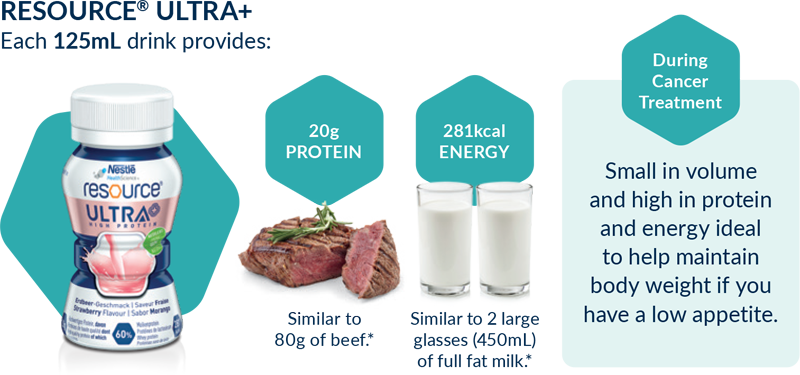
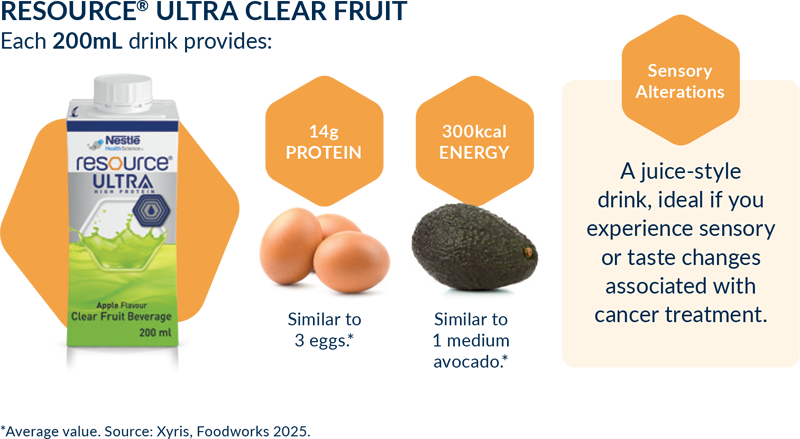
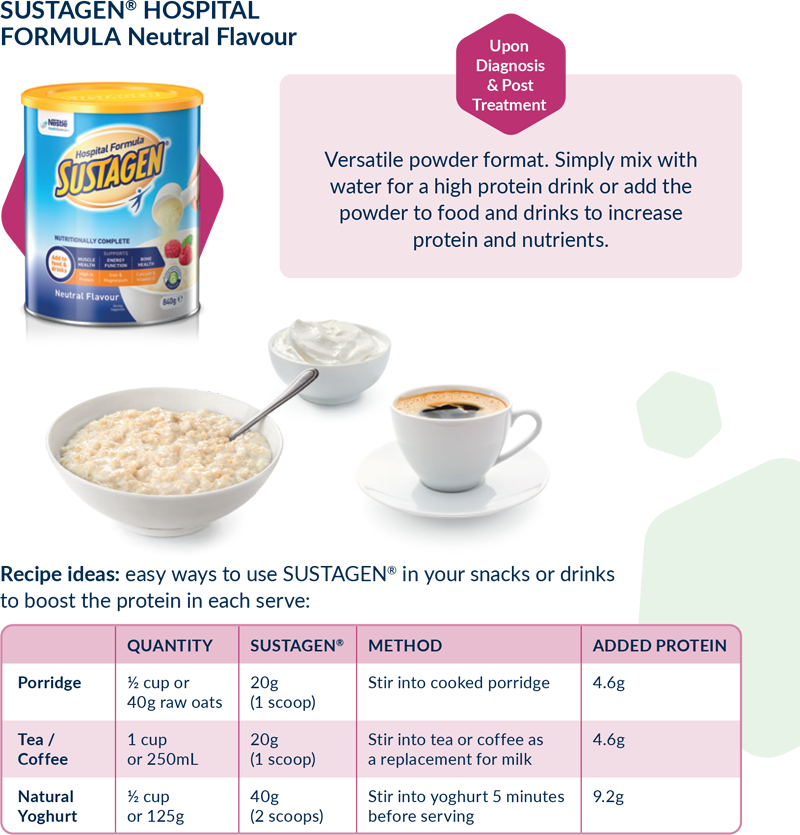
Oral Nutritional Supplements must be used under medical supervision. Always consult your healthcare professional (Dietitian, Nurse, Oncologist or GP) before beginning any nutritional supplement to ensure it is appropriate for you.
References:
1. Arends J, et al. Clin Nutr 2017;36:11e48.
2. Marshall KM, et al. Clinical Nutrition 2019; 38(2): 644-51.
3. Cereda E, et al. Radiother Oncol 2018;126(1):81-88.
4. Muscaritoli M, et al. ESPEN. Clinical Nutrition 2021;40:2898e2913.
5. Wang X, et al. Ann R Coll Surg Engl. 2021 Oct;103(9):630–637.
6. Cawood AL, Burden ST, Smith T, Stratton RJ. Ageing Res Rev. 2023 Jul;88:101953.
7. Ravasco P. Nutrition in Cancer Patients. J Clin Med. 2019 Aug 14;8(8):1211.
8. Arends J, et al. Clin Nutr 2017;36:1187-96.
9. Caillet P, et al. Clin Nutr. 2017 Dec;36(6):1473–1482.
10. Arends J, et al. ESMO Open 2021;6(3):100092.
11. Katiyar P, et al. J Clin Oncol 2021;39(3_suppl):466–466.
12. Capitão C. Support Care Cancer. 2022 Apr;30(4):3007 3015.
13. McCurdy K, et al. Nutrients 2019;11(11). 14. Stobaus N, et al. Nutr Cancer 2015;67(5):818-24. 15. Grupinska J, et al. Nutrients 2021;13:3549.
Know more about the subject

How to Keep a Good Mental Health After Going Through Cancer Treatment
Psychological follow-up and other therapeutic approaches are helpful for promoting wellness and avoiding negative emotions after the treatment has ended1

Is it Possible to Have a Vegetarian Diet During Cancer Treatment?
It’s best if patients do not make any dietary changes before talking to their doctor or nutritionist

The Cancer Diagnosis’ Psychological Impact
Anxiety, irritability, apathy, sadness, and depression are common feelings amongst cancer patients.1

What Does the Information on Nutrition Facts and Food Labels Mean?
Knowing what you're eating helps you make healthier choices.

How to Have a Better Diet Before Starting Cancer Treatment
Why is it important to make changes on your diet before the treatment?